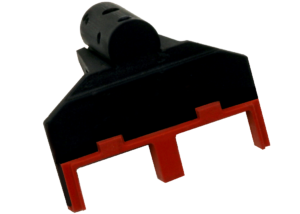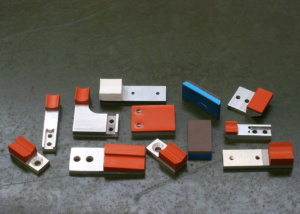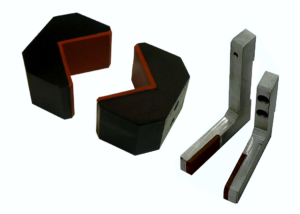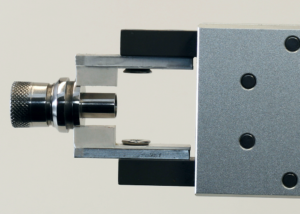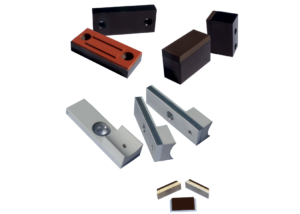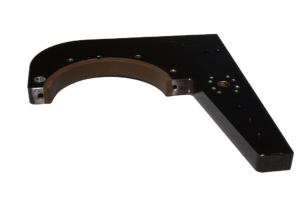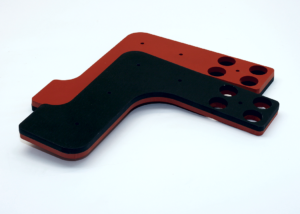
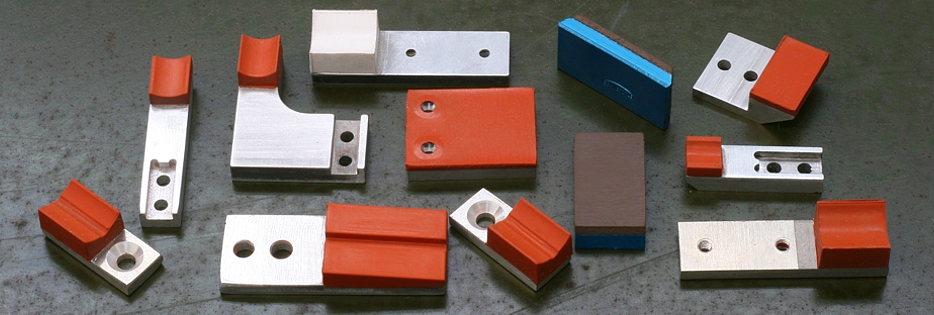
Schwerdtle manufactures custom gripper fingers — silicone chemically bonded to machined aluminum end effectors during our molding process — built to resist the delamination that causes glued silicone sheets to fail. Available in durometers from 40 to 90 Shore A (70–80 Shore A recommended for medical device handling), and rated to handle parts up to 500°F straight out of an injection molding press.
Schwerdtle works closely with your engineers or integrators to develop custom end-of-arm tooling components and gripper fingertips designed to maximize throughput and provide safe product handling. Our precision-molded, fully customized gripper fingertips can be shaped to accommodate different cylindrical or complex-shaped parts, and can accommodate internal grip, combined grip, or external grip formats.
Many manufacturers attempt to build their own gripper fingers by gluing inexpensive silicone sheet to aluminum backings. Because silicone’s non-stick properties work against adhesive bonds, these DIY grippers delaminate under repeated use — leading to dropped parts and production delays. Schwerdtle’s gripper fingers use a chemical bond formed between the silicone and aluminum during our molding process, not a surface adhesive, for a bond built to hold up in continuous production.
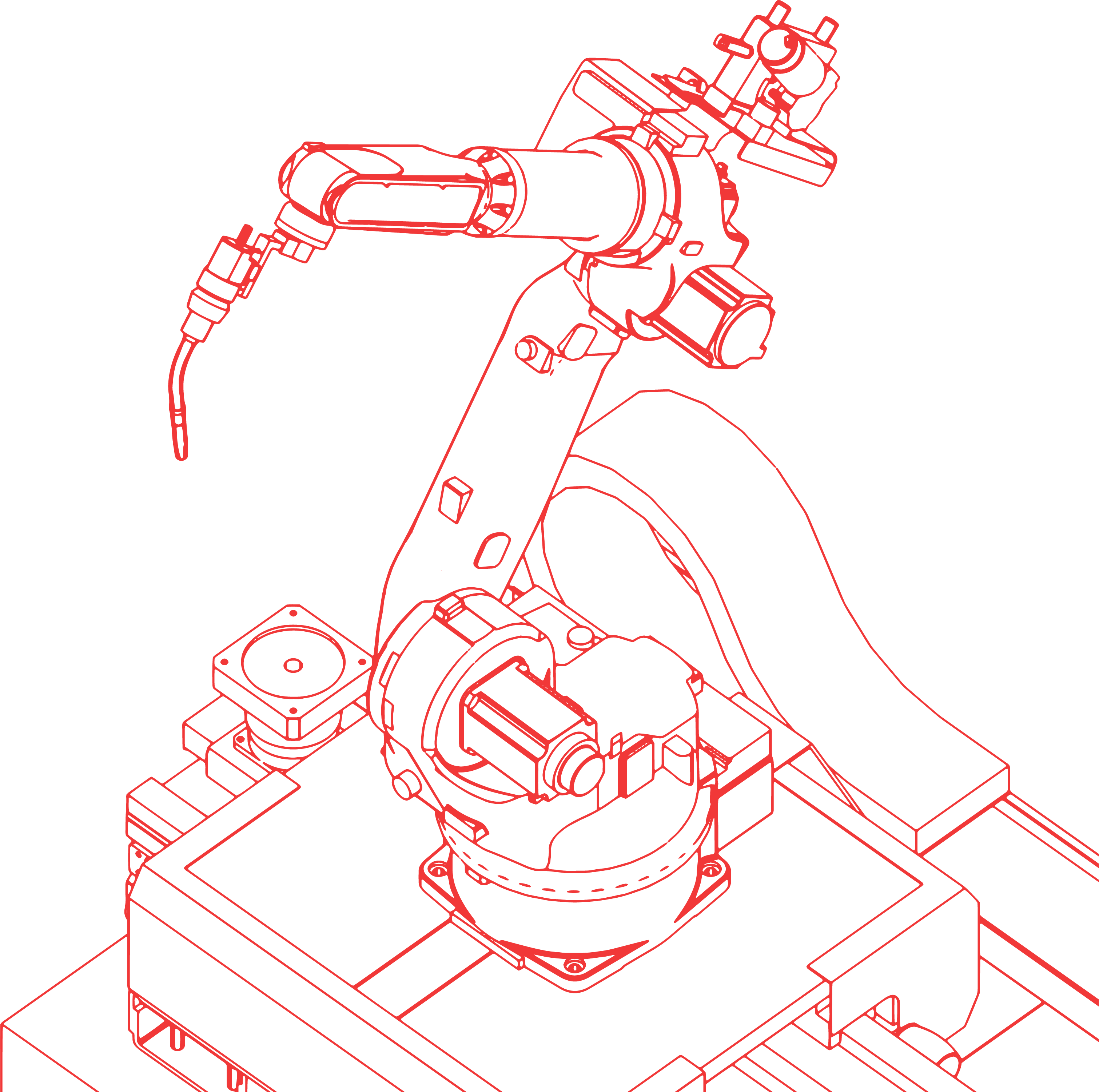
Adaptive grippers provide flexibility, allowing for agile manufacturing. Schwerdtle designs and manufactures custom fingertips that make your adaptive grippers work better. In many production environments, grippers and end-of-arm tooling components must handle parts that vary in size or shape — sometimes changing shape during processing itself. Innovative end effector design retains all the benefits of a custom-molded piece while maximizing the versatility of your adaptive gripper requirements.
Off-the-shelf silicone sheet, glued onto aluminum backings, relies on adhesive alone — and silicone’s natural non-stick properties work against the bond over time. Repeated gripping cycles cause the silicone to separate from the aluminum, leading to dropped parts and production delays. Schwerdtle’s gripper fingers use a chemical bond formed between the silicone and aluminum during our molding process, not a surface adhesive, for a bond that holds up to sustained production use.
Yes — Schwerdtle gripper fingers are rated to handle parts up to 500°F, making them suitable for handling components immediately after they come out of the injection molding press.
Schwerdtle manufactures gripper fingers across a full range of 40 to 90 Shore A durometer. For medical device handling specifically, we typically recommend 70–80 Shore A — firm enough for reliable grip and wear life, without the over-grip or accelerated wear risk of softer compounds in the 40–60 range.
Yes — Schwerdtle manufactures gripper fingers custom-molded to match customer part geometry, with aluminum backings machined to the customer’s mounting specifications for secure, precise attachment to robotic end effectors.
Silicone provides high coefficient of friction for secure grip while remaining soft enough not to scratch or mar sensitive medical device components — a combination harder gripper materials can’t match.