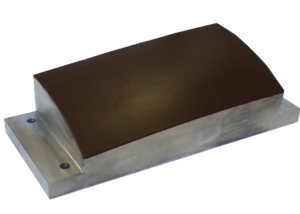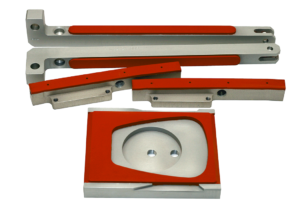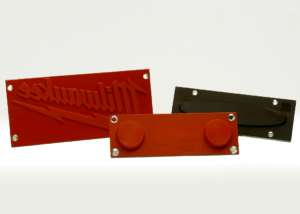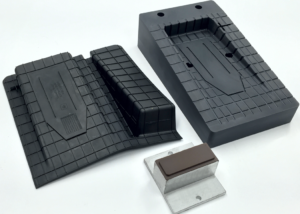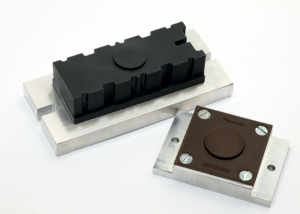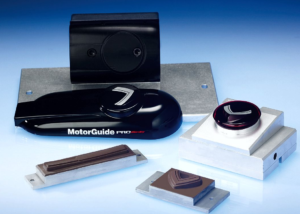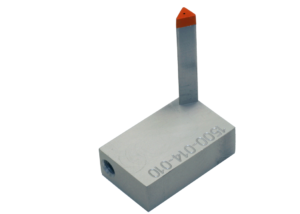
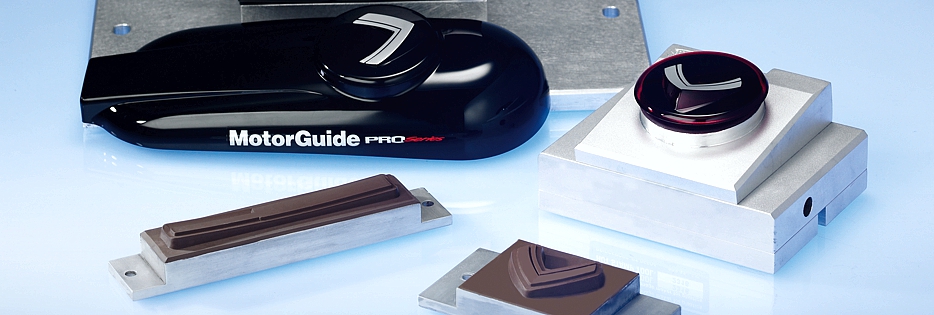
Schwerdtle designs and manufactures the dies and rollers used to apply heat transfers — a dry decorating process that bonds a pre-printed heat transfer to a part using heat, dwell time, and pressure, the same way hot stamping applies foil. The difference is what’s being transferred: hot stamping and silk screening both apply one color per pass, while a heat transfer carries a pre-printed, multicolor graphic that transfers as a whole in a single pass. Our silicone-bonded-to-metal tooling is machine-independent, built to mount on any manufacturer’s heat transfer equipment, and is recognized as an industry best-practice material for applying vibrant, high-resolution, multicolor graphics in a single pass.
Our clients operate across a range of categories including sports and outdoor equipment, pharmaceutical, health & beauty aids, and a multitude of consumer packaging companies where the technique is popular.
It’s worth understanding heat transfer’s place in the bigger picture: it isn’t a fundamentally different technology from foil hot stamping. Both rely on a carrier film, an adhesive formulation with its own release temperature, and both are limited by the same substrate realities. If a plastic won’t accept foil, it generally won’t accept a heat transfer either, and both may need the same surface pretreatment to get there. For a deeper look at how corona and plasma pretreatment technologies actually work, see Plastics Decorating’s Q&A with Enercon’s Wilson Lee.
Alignment matters more with heat transfer than with foil. Because the artwork is pre-printed and fixed, each transfer carries an eyemark that the machine reads with an electric eye to index it precisely, so it lines up exactly with the die and the part on every cycle. The die itself is built slightly larger than the transfer’s outside edges — typically 1/32″ to 1/8″ of margin, depending on the customer’s equipment and preference — to ensure full coverage of the transfer and minimize the witness mark the heat and pressure of the die can otherwise leave on the part.
Heat transfers can be printed using several different methods — screen-printed, gravure, digital, or hot-stamped foil, and combinations of ink and hot stamping — each suited to different production volumes, part geometries, and finish requirements. Schwerdtle can help you evaluate which approach fits your project.
Screen printing earns its place when you need bold, durable color and you’re running enough volume to justify the screens.
Gravure is a long-term bet, not a starter option — you’re buying the highest print quality on the market, and you pay for that up front.
The plastic decorators who choose gravure are the ones who’ve locked in a specific high-volume, long-run job and are buying equipment to match that contract, not building general-purpose capability.
Digital is the flexible option — you’re trading some print quality for speed to market and the ability to change your artwork frequently, even during the same run
Digital printing — whether applied directly to a part or printed onto a heat transfer carrier — is growing and offers real advantages like variable artwork and short-run flexibility. But it hasn’t closed two real gaps yet. First, digital metallic inks still don’t match the true shiny gold or silver look that foil-based heat transfers and hot stamping achieve — they’re improving, but for parts that need an authentic metallic finish, foil-based decoration remains the better choice for now. Second, for high-volume production with consistent, unchanging artwork, hot stamping and heat transfer have real operational advantages digital doesn’t: both are purely mechanical processes — no solvents, no ink vapors, no factory air quality concerns, no printheads or nozzles to clog or clean, no dust or particulate risk. Parts come off the machine finished and can go straight to inspection and packaging. Digital direct-to-part printing and silk screening both require drying or curing time before parts can be handled or stacked — UV curing stations, hot air conveyor dryers, or flash cure units all take real factory floor space, and introduce added risk of dust or particulates settling on the ink before it cures. For high-volume, unchanging designs, that operational simplicity often outweighs digital’s flexibility advantages.
For parts requiring maximum wear and chemical resistance — common in the durable goods market — Polyfuze heat transfers fuse printed artwork directly into the plastic itself rather than sitting on the surface. They cost a bit more and apply slightly more slowly than standard transfers, but for the right application, they’re often the only solution that meets the longevity and tamper-proof requirements.